Losing a tooth—or several teeth—can affect much more than your smile. It can make eating and speaking more difficult, affect confidence, and sometimes change the way the remaining teeth function.
Fortunately, there are several options for replacing missing teeth. Two of the most common are dental implants and dentures.
But which option is right for you?
The answer depends on more than just appearance. Your oral health, bone levels, budget, maintenance preferences, and lifestyle can all influence the best choice.
Let’s compare dental implants and dentures to help you understand your options.
What Are Dental Implants?
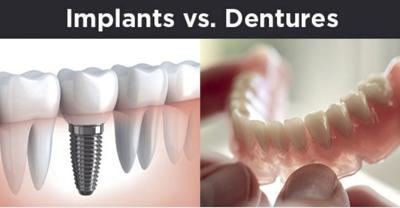
A dental implant is a small post, usually made from titanium or another biocompatible material, that is placed into the jawbone to support a replacement tooth.
Once the implant has integrated with the surrounding bone, it can support a crown, bridge, or implant-supported denture.
One of the biggest advantages of implants is that they are designed to provide a stable foundation for replacement teeth.
Advantages of Dental Implants
-
Feel more like natural teeth
-
Provide strong support for chewing
-
Do not normally require neighboring teeth to be reduced for support
-
Can be used to replace one or multiple missing teeth
-
Can support certain types of dentures
-
With proper care, they can be a long-term tooth replacement solution
However, implants require a surgical procedure and a healing period. Adequate bone and healthy oral tissues are important, and some patients may require additional procedures before implant placement.
What Are Dentures?
Dentures are removable appliances designed to replace missing teeth and surrounding gum tissue.
They can be used when a person has lost some teeth (partial dentures) or all the teeth in an arch (complete dentures).
Dentures are generally removable, meaning they can be taken out for cleaning and while sleeping, depending on your dentist’s instructions.
Advantages of Dentures
-
Usually less invasive than implant placement
-
Can replace several or all missing teeth
-
Often have a lower initial cost than implant treatment
-
Can provide an improved appearance and chewing function
-
Treatment can often be completed without implant surgery
However, traditional dentures may move slightly during eating or speaking, particularly if the fit changes over time as the jawbone and gums naturally change.
Dental Implants vs. Dentures: At a Glance
| Feature | Dental Implants | Dentures |
|---|---|---|
| Stability | Fixed and highly stable | Removable; may move depending on fit |
| Surgery | Usually required | Usually not required |
| Appearance | Designed to closely resemble natural teeth | Can provide a natural-looking smile |
| Chewing | Generally strong and comfortable | Can require an adjustment period |
| Maintenance | Brushing and regular dental care | Removal and regular cleaning required |
| Bone support | Implant stimulates the surrounding bone | Does not provide the same stimulation |
| Treatment time | Usually longer due to healing | Often faster |
| Initial cost | Generally higher | Generally lower |
| Long-term care | Regular oral hygiene and dental visits | Regular cleaning and fit checks |
Which Option Is Better for Your Lifestyle?
There is no single solution that is right for everyone.
Your lifestyle and priorities can help guide the decision.
If You Want a Fixed Solution
If you prefer replacement teeth that remain in place rather than being removed, dental implants may be worth considering.
Implants can provide a stable foundation and can feel more natural during everyday activities such as eating and speaking.
If You Prefer a Non-Surgical Option
If you want to avoid implant surgery, dentures may be a more suitable choice.
Traditional dentures can replace missing teeth without placing implants into the jawbone.
If You Have a Limited Budget
The initial cost of dentures is generally lower than that of implant treatment.
However, cost should be considered alongside long-term maintenance, replacement, and your individual dental needs rather than looking only at the initial price.
Your dentist can explain the expected costs of each option before treatment begins.
If You Want Easier Maintenance
Both options require care.
Implants are cared for with daily brushing and cleaning around the implant and restoration, along with regular dental check-ups.
Dentures need to be removed and cleaned regularly. Your dentist may also recommend leaving them out at night depending on your individual circumstances.
If You Are Looking for Maximum Stability
For patients who prioritize stability, implants—or implant-supported dentures—can be an attractive option.
Implant-supported dentures use dental implants to provide additional support and reduce movement compared with conventional removable dentures.
What About Bone Loss?
After a natural tooth is lost, the bone surrounding that tooth can gradually change and shrink over time.
Dental implants are placed in the jawbone and can help preserve the bone around the implant site.
Traditional dentures sit on top of the gums and do not provide the same type of stimulation to the jawbone.
However, whether implants are possible depends on factors such as the amount and quality of available bone and your overall oral health.
Can You Have Implants If You Already Wear Dentures?
Yes, in many cases.
Patients who already wear dentures may be candidates for implant-supported dentures. Instead of relying entirely on the gums for support, the denture is attached to implants placed in the jaw.
This can improve stability and may make eating and speaking more comfortable.
Your dentist or implant specialist can assess whether this option is appropriate for you.
Which Option Lasts Longer?
Both dentures and dental implants require maintenance.
Implants can provide a long-term solution when properly planned, placed, and maintained. However, the crown or other restoration attached to an implant may eventually need repair or replacement.
Dentures also require ongoing care and may need adjustment, relining, or replacement as the shape of the mouth changes over time.
Regular dental check-ups are important regardless of which option you choose.
Factors Your Dentist Will Consider
Before recommending a treatment, your dentist may evaluate:
-
The number and location of missing teeth
-
Your gum health
-
Jawbone volume and density
-
Existing teeth and their condition
-
Oral hygiene
-
Smoking habits
-
Medical and dental history
-
Your treatment expectations
-
Your budget and timeline
A thorough examination and appropriate imaging can help determine which options are suitable.
So, Which One Should You Choose?
There is no universal winner in the dental implants vs. dentures debate.
Dental implants may be a good choice if you prioritize stability, a fixed solution, and a long-term approach to tooth replacement.
Dentures may be a good choice if you prefer a removable solution, want to avoid implant surgery, or need a more affordable initial treatment option.
For some people, the best answer may be a combination—such as implant-supported dentures.
The Bottom Line
Replacing missing teeth is not just about filling a gap. The right treatment should fit your oral health, lifestyle, comfort, expectations, and budget.
If you’re considering dental implants or dentures, speak with your dentist about the advantages, limitations, costs, and expected maintenance of each option.
A personalized examination is the best way to determine which tooth replacement solution is right for you.